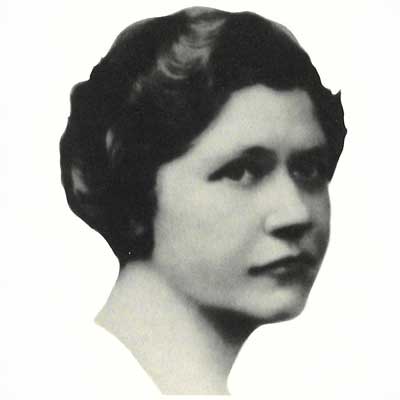
Teaching had always been her calling. Her earliest classroom was her childhood nursery, where, at age five, she gathered her dolls and “taught” them the lessons she’d learned that day. As she grew older, neighborhood girls would come over to “play school.” Louise was always the teacher—an early sign of what was to come. Though she once considered studying medicine, thinking it might be a more “worthy” profession, she soon realized her true vocation was education.
When Louise joined Harley in September 1925, the school was located at 242 Oxford Street. It was a small, close-knit community—she and a parent shared the teaching of Grades 3 through 6, and the entire school extended only through Grade 8, with just one eighth grader that year. Mothers often stepped in as staff when needed, and younger children went home at noon.
1925 was a year of change and vision. Harley was transitioning from its Montessori roots toward a more progressive model, and Louise was deeply involved in reorganizing and planning for the school’s future. In the winter of 1926, the all-women board made a bold decision: Harley would expand to include Grade 12 and expand to a “Country Day” location. For a short time, the school operated from two sites—Oxford and Clover—before officially settling at 1981 Clover Street, where it still stands today.
Louise was described as a born teacher—an idealist with a distinct and engaging personality. Under her leadership, Harley became what she called “the only school in the world that definitely set out to be different.” The curriculum reflected her progressive vision: no homework, an emphasis on experiential learning rather than textbooks, and a focus on the whole child through five areas of development—artistic, character, health, mental, and social.
Her personal passions mirrored the school’s philosophy. She was especially drawn to the arts and sciences and believed that education should nurture curiosity and creativity. A passionate traveler, she once said, “I would like to spend a lifetime in each country and soak up the atmosphere.”
Louise Sumner’s leadership set the tone for Harley’s enduring spirit—boldly progressive, deeply human, and always striving to be a place where learning meant far more than memorizing facts. It meant shaping lives.