Originally appeared the Rochester Business Journal
By Dr. Ryan Kimmet
In today’s landscape, it’s easy to understand why certainty is so prized. The more we know, the better our decisions should be. The more confidence a leadership team has at a critical moment, the more likely they are to get it right.
But is certainty a realistic goal anymore or even the right one?
For decades, business leadership has been built on the assumption that with enough data, enough analysis and enough time, the right answer will reveal itself. That assumption is becoming harder to defend. Markets shift faster. Technology evolves in real time. Competitive advantages erode more quickly than ever before.
Consider Blockbuster. In the early 2000s, it had every reason to believe its model was sound. The data was strong. The brand was dominant. While there was some awareness that streaming could emerge, it wasn’t viewed as an immediate threat. The model wasn’t broken, so there was no urgency to fix it.
Meanwhile, Netflix was experimenting with unconventional ideas, including mailing DVDs to customers. There was little certainty that these approaches, or the eventual shift to streaming, would succeed. But Netflix was not constrained by the need for complete information. While Blockbuster waited for clearer signals, Netflix moved forward and, in doing so, built the future of content delivery.
The story of Kodak offers a similar lesson, and one that hits particularly close to home in Rochester. Despite pioneering digital photography technology, Kodak remained anchored to its existing model. The reluctance to fully embrace an uncertain and unproven future proved costly.
As we enter the AI era, where capabilities are evolving faster than most organizations can fully grasp, these examples feel less like history and more like warning signs. Leaders today are not just making decisions in uncertain environments; they are doing so in conditions where the ground is actively shifting beneath them.
In that context, the traditional pursuit of certainty can become a liability. The cost of waiting for clarity may, in fact, be higher than the cost of being wrong.
And yet, there are environments where uncertainty is not treated as a risk to be minimized, but as a tool to be leveraged.
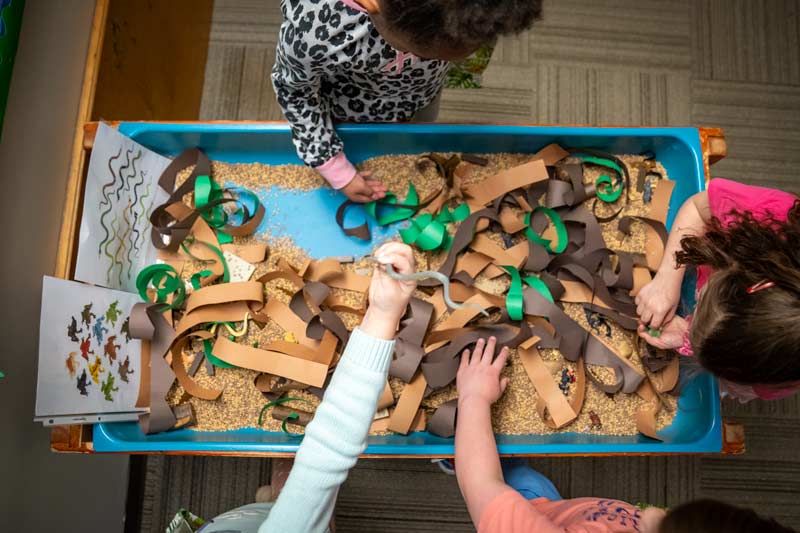
In schools like The Harley School, learning is intentionally designed around inquiry rather than certainty. Mistakes are not only accepted, they are expected. Questions often matter more than answers. Teachers emphasize iteration over perfection, and ambiguity is not something to eliminate, but something to explore.
This shows up in both small and significant ways. A student studying Hamlet may analyze multiple interpretations of the same scene. Which one is correct? In many cases, the answer is not singular. The value lies in exploring the possibilities, not arriving at a single definitive conclusion. In fact, the absence of one “right” answer often leads to deeper understanding.
It also shows up structurally. Students revise work repeatedly. They present their thinking, receive feedback, and refine it. Progress is measured not just by outcomes, but by growth over time. The process itself is visible and valued.
This approach is grounded in what psychologist Carol Dweck calls a “growth mindset”—the shift from “I’m not good at this” to “I’m not good at this yet.” In this model, not knowing is not a failure; it’s a starting point.
That mindset is far less common in the corporate world.
In many organizations, not having answers is seen as a weakness rather than an opportunity. Leaders feel pressure to project confidence and certainty, even when neither truly exists. Employees are often expected to plan extensively before acting, rather than test, learn and iterate. The result is a bias toward over-planning and under-experimenting, exactly the opposite of what a rapidly changing environment demands.
So what might it look like to borrow from the classroom?
It might mean normalizing “not knowing yet” as part of the leadership process—creating space for teams to explore without the expectation of immediate precision.
It might mean shortening feedback loops—testing ideas quickly, learning from real-world results, and adjusting in real time rather than relying solely on upfront analysis.
It might mean rewarding thoughtful exploration alongside outcomes—recognizing that intelligent risk-taking is often what leads to breakthrough results.
None of this suggests that businesses should operate like schools. The stakes, timelines and accountability structures are fundamentally different. But the underlying mindset, the willingness to engage with uncertainty rather than avoid it, is increasingly essential.
The next generation of breakthrough companies will not be led by those with the clearest maps. They will be led by those most comfortable moving forward without one, leaders who are willing to experiment, adapt, and learn in real time.
For decades, we have expected our leaders to be experts.
The future may belong to those who are willing to be learners.
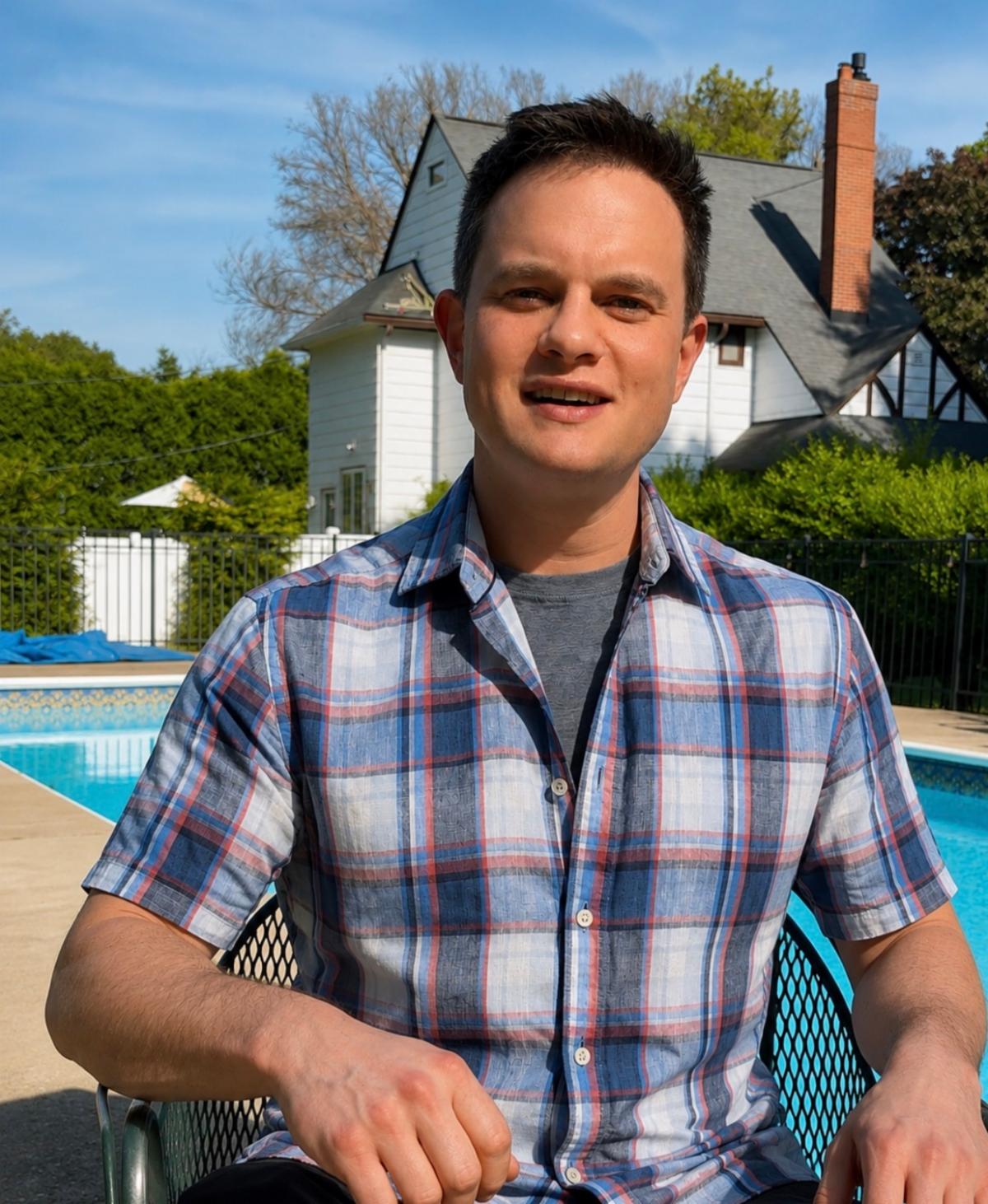
Dr. Ryan Kimmet is the Head of School at The Harley School and a veteran leader in independent education. His column explores the intersection of K–12 innovation, workforce development and the regional economic impact of modern schooling.