When she entered in Grade 5, she was already living a life most adults would find exhausting. While her classmates were just beginning their school days, Laurie had often already been awake for hours, sometimes since three or four in the morning, lacing up her skates, and heading to the rink. She wasn’t just skating for fun; she was training seriously, chasing the demanding path toward becoming a professional figure skater.
Harley was chosen not for its academics, but for its ability to work with her schedule. In a small class of just five students, Laurie’s parents made an agreement with Dr. William Litterick (Headmaster, 1954-59) that allowed her to leave school early, miss weeks at a time for competitions, and shape her education around her training schedule. By her own admission, she wasn’t always present—physically or academically. She didn’t join clubs or take gym. Many classmates barely knew her.
After long, cold mornings at the rink, school felt like a kind of rest. Even if she was tired, even if she struggled to keep up at times, there was something steady and grounding about being there. And beneath the unconventional rhythm of her days, she quietly developed a love of learning. She credits teachers like Leonard Opdyke (English and Head of Middle School, 1956-1964) for this. “I’m sure you’ve heard that before. He was a fabulous teacher. And I mean, what I came out of Harley with, I think, was a very good attitude toward education. It’s a love of learning and reading that stayed with me.” She also remembers the profound influence of Bud Ewell ‘40, P ‘66, ‘70 (Math and Science, 1952-59, Head of Lower School, 1959-63, Head of Middle School, 1964-1980, Woodworking, 1982-1993), whose philosophy centered on helping children remain curious and joyful in learning. Looking back, she sees Harley as a place where many teachers supported and encouraged her, shaping not only her education but her outlook to stay curious throughout life.
That realization didn’t happen right away. In the early years, her report cards reflected inconsistency and disengagement. But Laurie was used to discipline, to pushing through setbacks. After a disappointing skating competition late in Upper School, she made a pivotal decision to step away from competitive skating.
For the first time, she leaned fully into school—socializing more, studying harder, imagining a future beyond the rink. Her grades rose. Her confidence shifted. And when she applied to college, it was not just her academics but her story, her grit, her years of dedication from years of skating, that helped carry her forward.
At Barnard College, Laurie entered a completely different world. The rigid structure that had defined her life was suddenly gone, and the adjustment wasn’t easy. But once again, she adapted. She worked to support herself. She started babysitting at first, then teaching skating in New York. That skill, forged in childhood, became her bridge to independence. It paid her tuition and sustained her through college and into her early career.
Still, life didn’t follow a straight path. After Barnard she spent a brief time in law school, but decided that path was not meant for her.
In her thirties, she made another pivot—returning to school to earn an MBA from UCLA. From there, she built a successful career in business, often working as a consultant, including time with Deloitte. She crafted a professional life that gave her money and flexibility. With this, she had the freedom to choose projects and to travel.
In her fifties, Laurie and her husband made a decision that would reshape the next chapter of their lives. They left the United States and settled in a small village in southern Ecuador called Vilcabamba.
In 2009, they co-founded a small foundation, One World Vilcabamba, dedicated to expanding opportunities for local children. What started as a simple idea of offering free English classes, grew into a program that served hundreds of students across the community. They partnered with local schools, supported teachers, and created access where little had existed before. For over fifteen years, the work has continued, quietly but meaningfully shaping lives.
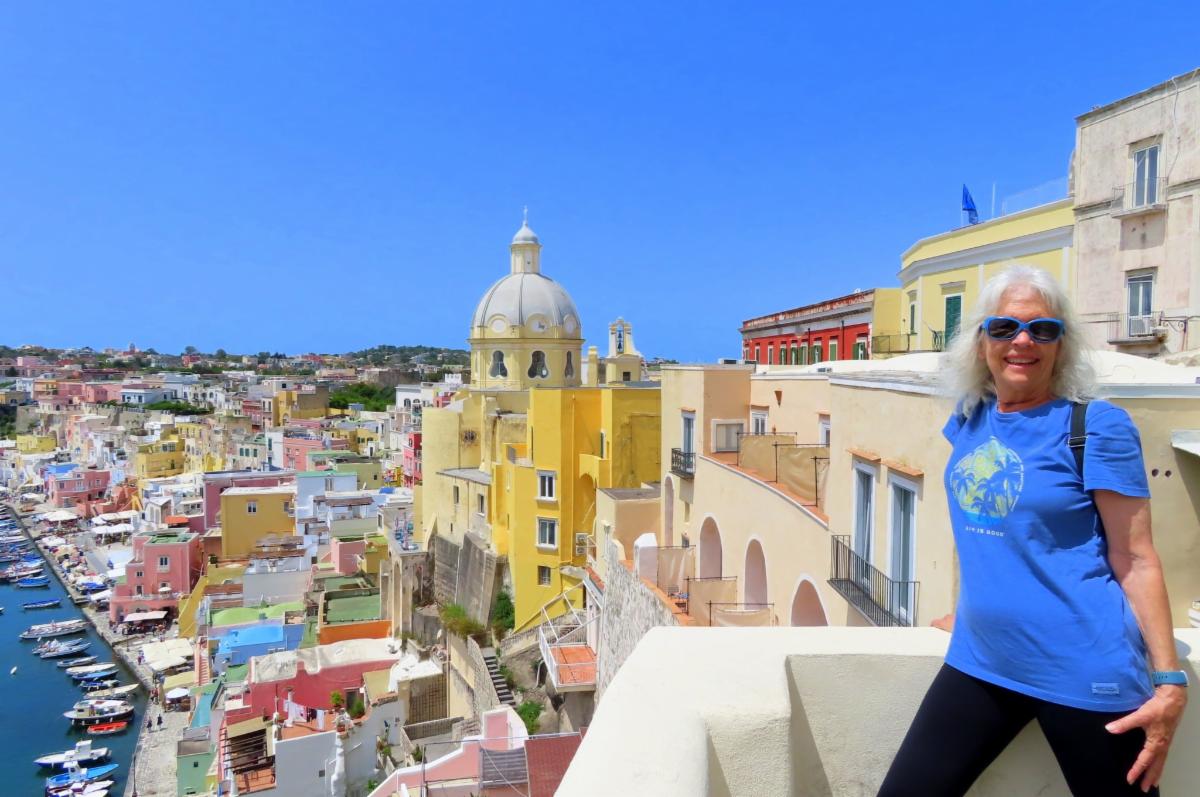
And alongside that work, Laurie embraced another lifelong pursuit: seeing the world.
Today, she is a traveler in the truest sense. She is not just going to a destination as a tourist, she does her research and learns about the community. She and her husband plan journeys that stretch across continents—Asia, Africa, Europe, South America—often for months at a time. She studies the places they visit, organizes their experiences afterward, and reflects deeply on what they’ve seen.
Ask her for a favorite destination, and she resists the question. She says, “Every place offers something. Every culture teaches something new.” That curiosity and the desire to understand differences, to keep learning, is what drives her.
It’s the same curiosity that was sparked, quietly, years ago in a small classroom at Harley.
She still remembers a teacher from Grade 5. She can’t remember his name, but she said he was young, married, stayed at Harley for one year, and he was someone who abandoned the expected curriculum. Instead, he read bold, challenging books aloud to the class. She says the material may have been unconventional, even inappropriate for their ages, but it left a mark and is one of the most memorable things she has retained from Harley. It showed her that learning wasn’t just about assignments or grades, it was about ideas, imagination, and seeing the world differently.