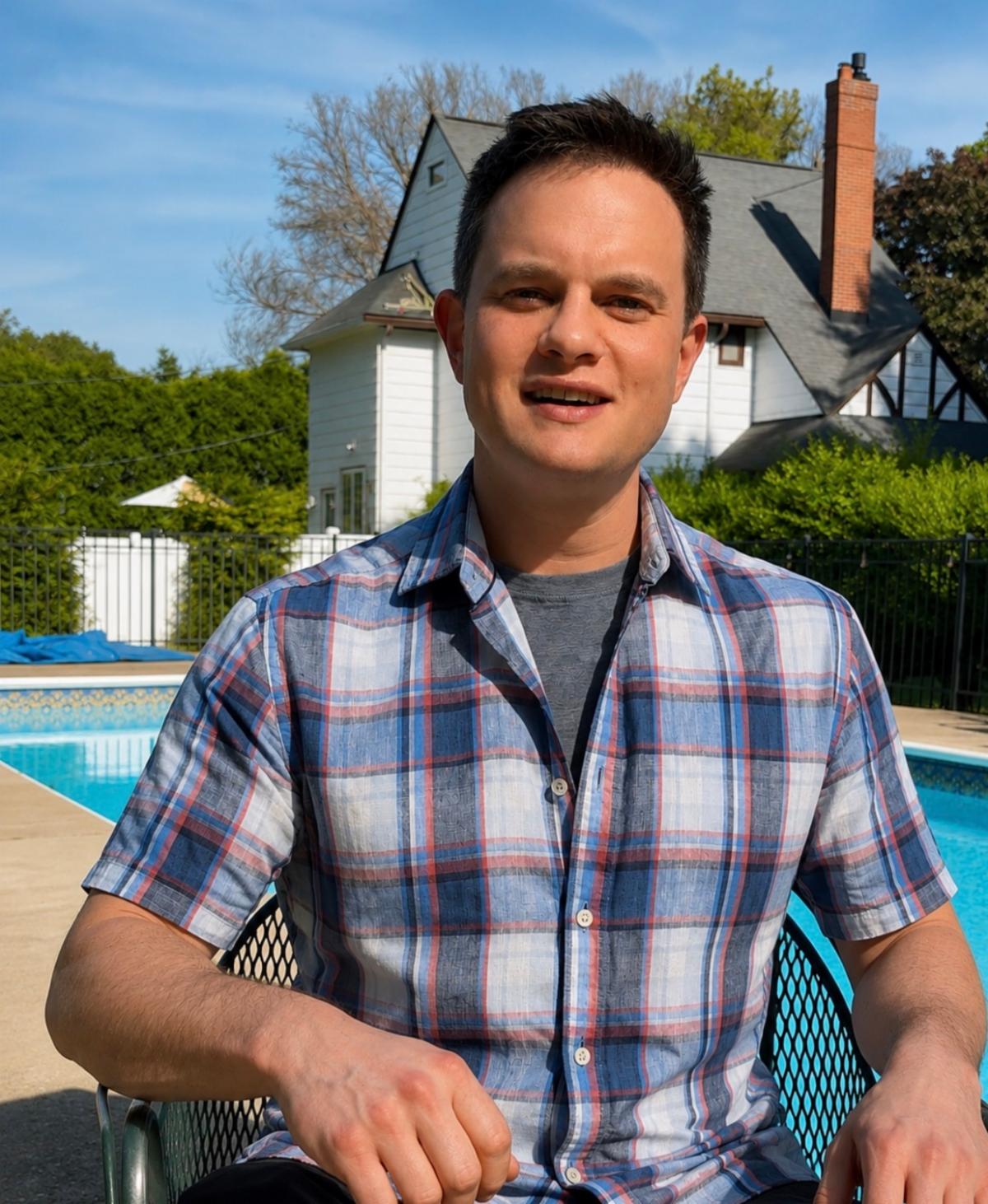
For Michael Kaminski ‘04, innovation started with curiosity — and a swimming pool.
Michael arrived at Harley in 2001, during a week forever marked by the events of 9/11. Despite the difficult start, he found inspiration in Harley’s classrooms and teachers. He credits educators like Cindy Richards (Science, 2000-09), John Dolan (Psychology, 1994-present), Sandy Foster P ‘19, ‘19 (History, 1997-2022), and Jessica (Lyon) Densmore (Latin, 1997-2023) with helping shape both his scientific thinking and his curiosity about how people and systems work.
After Harley, Michael studied biology and pre-med at Kenyon College, earned a master’s degree in biotechnology from Johns Hopkins University, and attended Kansas City University of Medicine and Biosciences before realizing that traditional medicine wasn’t the right fit, because, he says, “I wanted to create things. That’s what really energized me.”
That creative instinct took an unexpected turn during the COVID-19 pandemic, when Michael returned home and became fascinated by his parents’ swimming pool system. After experimenting with ways to improve the water quality (which he did!), his father challenged him to create something other pool owners could use.
The result was an early prototype called Poolside — an affordable, garage-built machine that automatically monitored and adjusted pool chemistry. But Michael quickly learned that people didn’t like it because it was right next to the pool. Moving it into the pool shed was going to be more expensive and he had to consider, how do you safely and affordably inject chemicals into a high-pressure system?
Traditionally, industries ranging from pools and agriculture to HVAC and water treatment rely on large, expensive pumps to force chemicals into pressurized pipes. Those systems consume significant power and can cost thousands of dollars. Using that creative mind, Michael wondered if he could create something that didn’t need to fight the pressure at all.
Instead of overpowering the system, he designed a process that temporarily creates a small low-pressure zone inside the pipe using a carefully timed valve sequence — “kind of like an airlock on a spaceship, but for plumbing,” he explains. Once that low-pressure space exists, a much smaller and dramatically less expensive pump can inject the chemical before the system returns to normal operation.
The impact could be significant:
- Pump costs reduced from roughly $2,500 to about $30
- Power consumption reduced by more than 60 times
- Applications across more than a dozen industries, including agriculture, water treatment, aquaculture, HVAC, and industrial manufacturing
Michael worked with undergraduate, graduate students, and engineering professors at the University of Rochester to develop the electronics and circuit boards needed for the prototype. He also used Artificial Intelligence tools to “red team” the patent process — searching for vulnerabilities and solving them before making the final prototype for patent.
That patent journey proved challenging. After filing in October 2025 through the U.S. Patent and Trademark Office’s accelerated Track One program, Michael initially received a rejection because examiners believed the invention resembled a device patented in 1892. He and his attorney were able to go back and argue that the difference between that model and his was modern automation and control. His system integrates microcontrollers and can communicate directly with industrial control systems already used in factories and facilities. The invention was ultimately approved because it introduced a novel, non-obvious approach using technologies that simply did not exist more than a century ago.
Now operating through his own micro-entity LLC, Michael has invested roughly $85,000 into development and is preparing for the next stage: licensing the technology to companies across multiple industries.
For Michael, the project represents something larger than a single patent. This January, he plans to attend a major trade show in Las Vegas to present the invention to potential partners and patent brokerage firms. He is also continuing to expand the platform for specialized applications, including medical systems, petrochemical refining, and aquaculture.
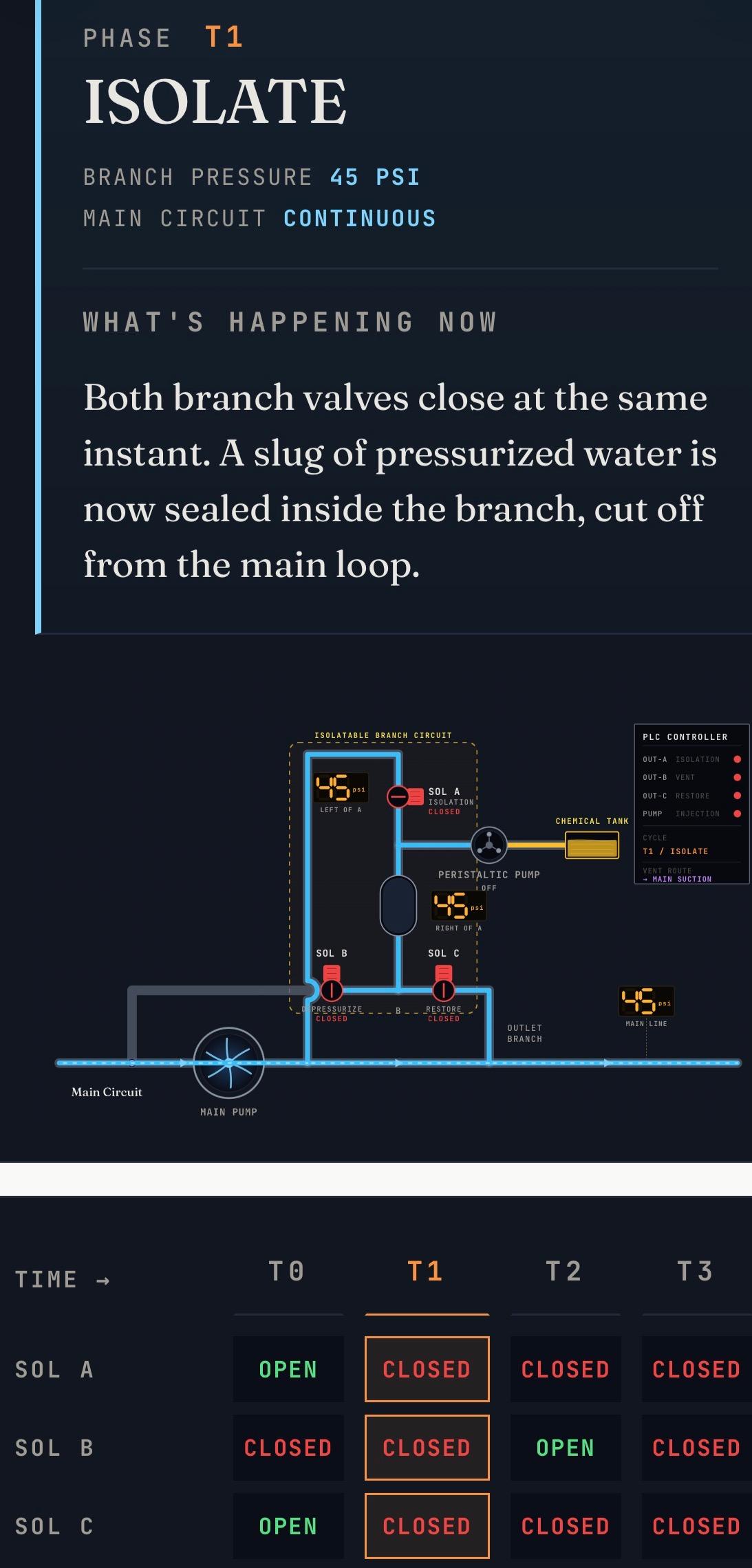
For our engineer friends, Michael gave a little more detail about the machine: "It uses computer controlled solenoids that are choreographed to complete 4 steps: isolation, venting, chemical injection, and flushing. Its function is to flush a bolus of chemical additive, injected into a mixing cylinder by a low-pressure pump, into the main pressurized conduit."